


AVaTAR — Asian Literature in the Victorian World


AVaTAR: a Global Collection
Archive of Victorian Translations from Asia and their Readerships
Asian Literature in the Victorian World
- by Alexander Bubb
- 31 March 2025
- Previous:
Marginal Activity: Two Rubaiyat Readers
29 July 2024
AVaTAR stands for Archive of Victorian Translations from Asia and their Readerships. But “Victorian” does not refer merely to nineteenth-century Britain. For one thing, around 20% of the collection’s books were issued by American publishers, the rest being published in England or Scotland, with a few interesting exceptions (for example, a copy of Herbert Giles’s Gems of Chinese Literature was printed by the prolific Shanghai publisher, Kelly & Walsh). More importantly, AVaTAR’s readers were located in at least seven countries. Many of these books are seasoned travellers: they have roamed across the late imperial world, and found their destined readers very far from their original place of publication.
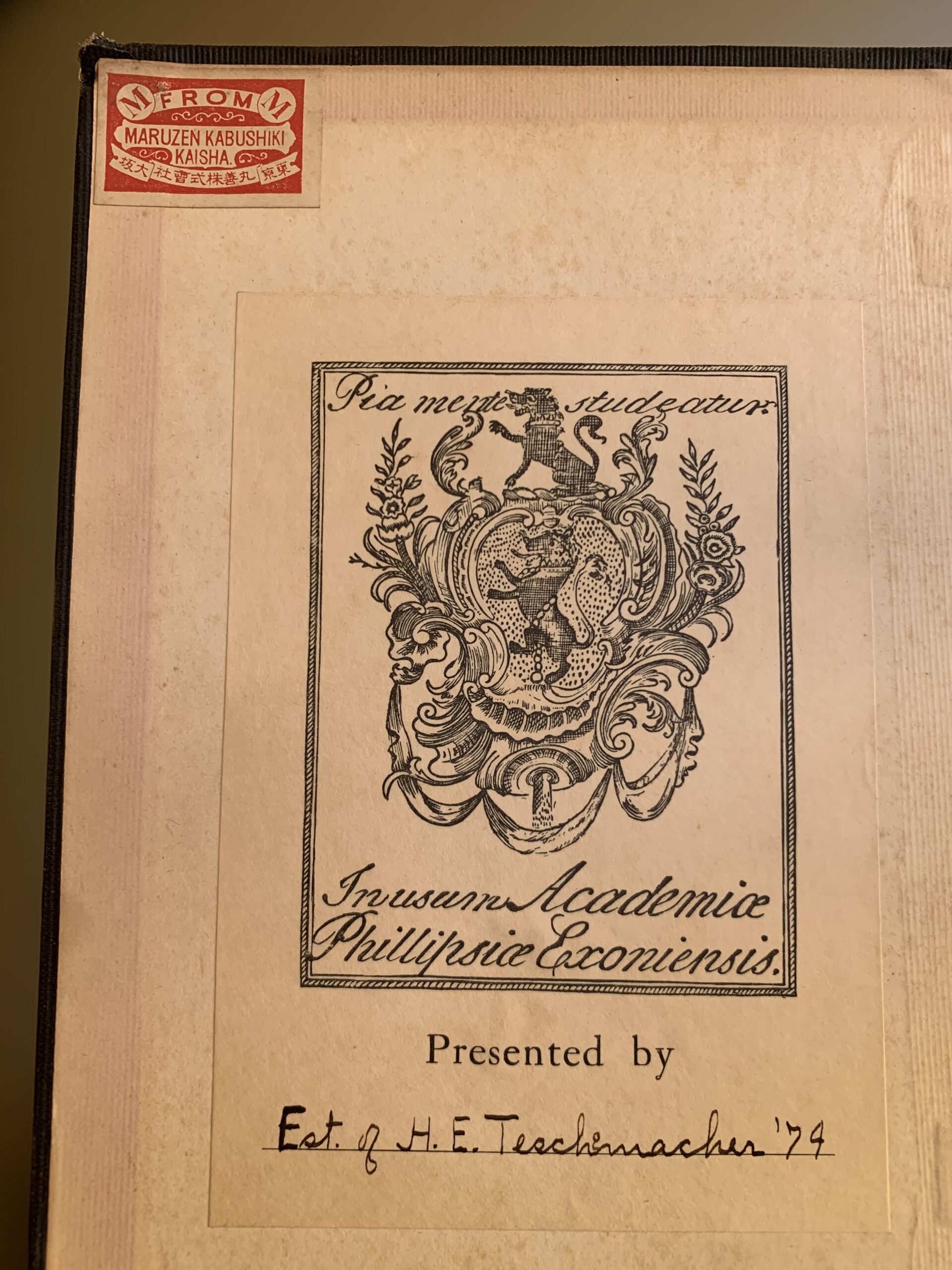
One way to follow these journeys is to see where former owners have left their signatures on the flyleaf or title page: luckily, as well as their names they also often wrote their place of residence. A second method is to look at the stickers and stamps left inside the books by the bookshops that sold them. For example, my copies of Mitford’s evocative Tales of Old Japan were published by Macmillan of London, but both ended up in Tokyo—not the eighteenth-century Tokyo described by Mitford, but the rapidly modernizing city of the late 19th Century. One is signed ‘Herbert Harrison / British Embassy’, and thus belonged to a consular official in the very same embassy where Mitford himself had served thirty years earlier. The other was sold to the American tourist Hubert Teschemacher at Maruzen Kabushiki Kaisha, a Japanese company founded in 1869 and still a well-known retailer today. Teschemacher retired to Switzerland, where the book is likely to have accompanied him, though at his death it was bequeathed to the library of his former school in New Hampshire, the school pasting its sober bookplate inside the front cover, just beside the Japanese bookshop’s bright red sticker.
In another AVaTAR book, the bookseller’s sticker has been torn in half, though enough remains to indicate that the volume, a 1911 printing of Fitzgerald’s Rubaiyat of Omar Khayyam, was purchased at G.S. Forsyth’s shop on Hastings Street in Vancouver. The purchaser, Ernest Chave, intended it as a Christmas gift for Winnifred Carruthers, the woman he would later marry back in his home province of Ontario. So the book, printed in Edinburgh in 1911, was sold two years later in British Columbia, and then posted or carried to Ontario. It subsequently accompanied the by then wedded couple when they moved to Chicago, and a century later, I bought it from a bookseller in New York. On the other side of the world, Ram Gopal picked up his copy of the Sanskrit epics at Higginbotham’s, Bangalore’s most celebrated bookshop. It may well have travelled in the dancer’s luggage on his tours of Scandinavia, the US and other parts of the globe, before Gopal’s death in England left it awaiting a new reader in the secondhand mecca of Hay-on-Wye. Three AVaTAR books that have travelled still further ended up in various parts of Australia. In 1936 the painter May Butler-George bought The Singing Caravan from Angus & Robertson on Castlereagh Street in Sydney, then as now the Australian chain’s flagship store. This anthology of Arabian poetry bears the shop’s sticker and an intriguing poem, apparently written by the reader herself and inspired by the famous Arch of Ctesiphon near Baghdad. Unlike the Sydney bookshop, Propsting & Morris disappeared long ago from Liverpool Street in Hobart, Tasmania, but their stamp survives in the copy of One Hundred Poems of Kabir that Willoughby Connor presented to his friend W.M. Gibson in 1917. Later the book was gifted for a second time, and moved to a new home in Adelaide. I bought it on a trip to Melbourne, along with a copy of Sadi’s Gulistan in the cheap Camelot Classics series that is signed by the journalist Gottlieb Schuler, a German immigrant who served twenty six years as editor of The Age newspaper. Translated from Arabic, medieval Hindi and Persian, respectively, these books attest to the significant demand for Asian literature Down Under in the years following Australian Federation in 1901. This is just a small selection of the collection’s diverse readers, who lived not just in urban centres like London, Liverpool, New York and Los Angeles but also in small towns like Shrewsbury and Gillingham, and rural locations like the Channel Islands, eastern Kansas and Oklahoma.
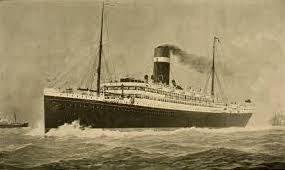
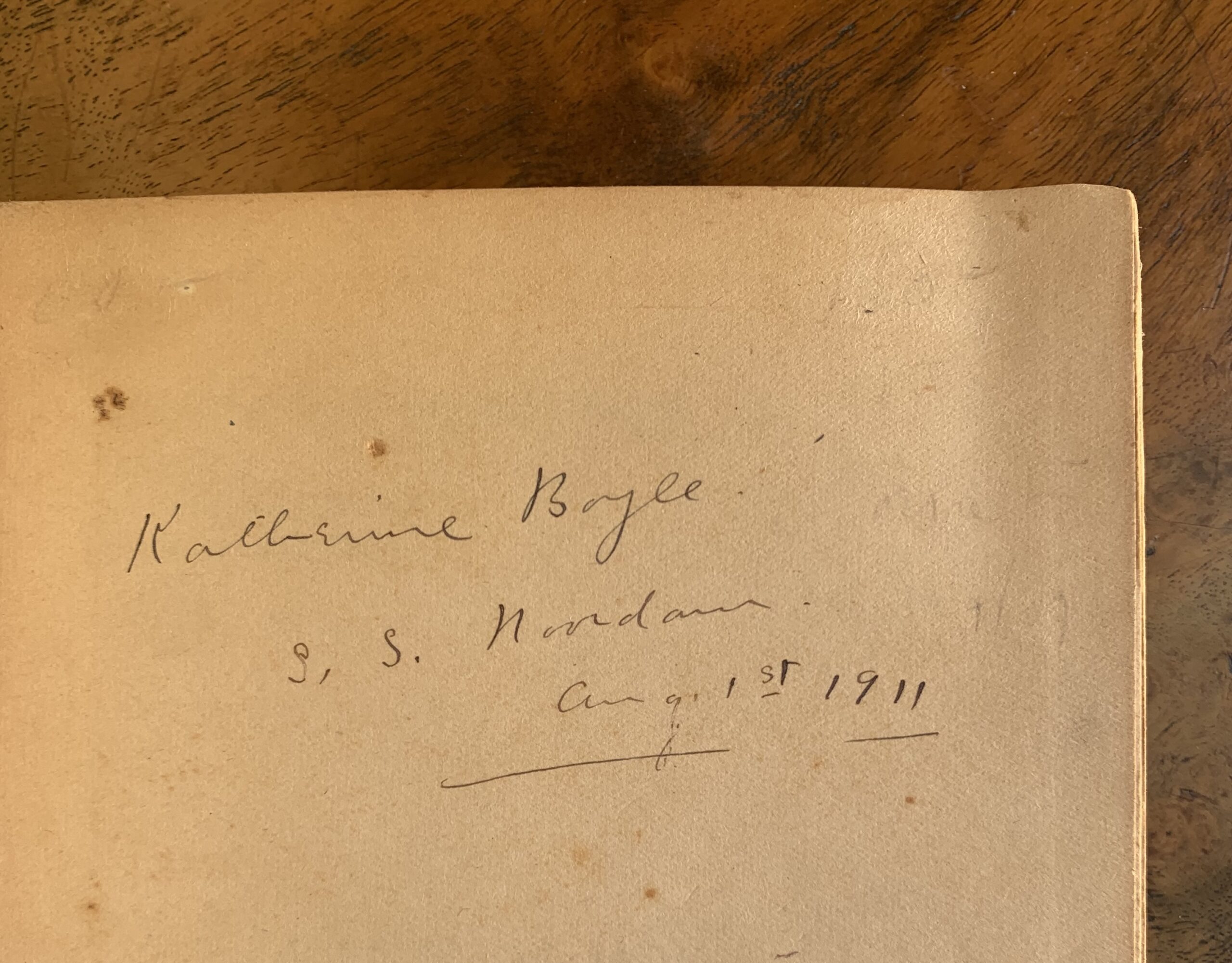
‘There is no frigate like a book’, wrote Emily Dickinson, referring to the capacity of literature to transport us on flights of the imagination. But the robust, lightweight books of the 19th Century coped well with actual journeys too. They were commodities fitted to global commerce and to lives lived in a state of translation. One book, a copy of A Lute of Jade signed ‘Katherine Boyce / S.S. Noordam / August 1st 1911‘, even seems to have been read during the course of a transatlantic crossing. In AVaTAR, such itineraries are not exceptional: in fact, it is the few books that have stayed in one place that are the exceptions.
Comments:
Comments on “AVaTAR: a Global Collection” (0)